
The Color Code Personality Framework: A Comprehensive Guide for Clarity and Growth
Real Colors Personality Test
Get StartedWhat Is the Color Code and Why Does It Resonate
The Color Code is a personality framework that organizes core human motives into four intuitive categories: Red (power), Blue (intimacy), White (peace), and Yellow (fun). Instead of focusing only on observable behaviors, the approach traces decisions back to the emotional drivers underneath them. That focus on motive helps people decode why they act the way they do under stress, in relationships, and at work. Because the color language is simple and memorable, it travels well across departments, cultures, and even age groups without diluting meaning.
Rather than cataloging surface habits, the model offers a lens into predictable patterns that show up in communication, conflict, and problem‑solving. Across coaching, hiring, and relationship counseling, the color code personality test functions as a fast gateway to that motive structure. With just a brief assessment, individuals gain a vocabulary for their strengths, their triggers, and their blind spots. Teams gain a shared map of differences that reduces friction and speeds up decisions. Leaders gain a repeatable way to tailor feedback, assign roles, and design development plans that fit how people are wired.
Because it prioritizes simplicity without sacrificing depth, the framework avoids the jargon that often sidelines more complex typologies. Color names invite curiosity rather than judgment, and discussions tend to stay constructive. Over time, that accessibility allows communities, families, classrooms, nonprofits, and businesses to build rituals around better conversations. The result is a durable language for self-awareness that scales from a one‑on‑one coffee chat to a company‑wide change initiative.
How the Four Colors Map to Core Motives
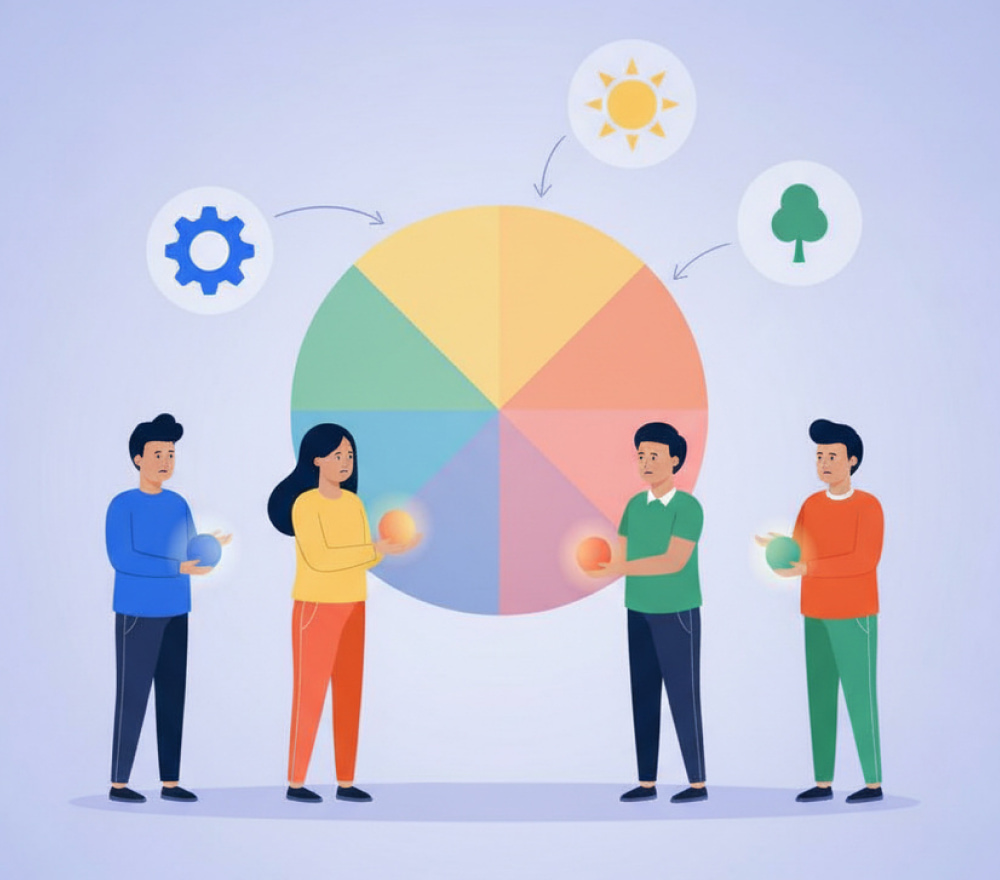
Each color points to a dominant motive that shapes choices under pressure and in everyday routines. Reds seek productive influence and results, moving quickly and decisively. Blues prioritize loyalty, depth, and connection, often bringing empathy and principled standards. Whites value harmony and a calm environment, contributing steadiness and impartial thinking. Yellows pursue enthusiasm and shared experiences, energizing groups with optimism and spontaneity. While one motive usually leads, people carry secondary tendencies that flavor the whole profile, making each person’s expression distinct.
| Color | Core Motive | Natural Strengths | Growth Focus |
|---|---|---|---|
| Red | Power (productive influence) | Decisive, strategic, direct | Patience, collaboration, listening |
| Blue | Intimacy (connection and loyalty) | Empathetic, conscientious, committed | Flexibility, forgiveness, risk‑taking |
| White | Peace (calm and clarity) | Composed, objective, consistent | Assertion, engagement, initiative |
| Yellow | Fun (joy and shared experience) | Optimistic, social, spontaneous | Follow‑through, depth, focus |
Labels are meant to guide, not to box people in; a Red can be tender, and a Blue can be bold, depending on context. In historical perspective, the hartman color code personality test condensed years of clinical observations into accessible color shorthand that anyone can learn. That blend of rigor and clarity is why the model shows up in mentoring programs, marriage workshops, and leadership academies. By naming the motive behind the move, the framework helps people choose responses instead of reflexes, especially when tensions rise.
Benefits, Applications, and Real-World Wins
Practical value emerges whenever insight meets action. In organizations, roles and workflows snap into place when leaders align tasks with natural drives: Reds own decisive calls, Blues elevate quality and trust, Whites steady complex systems, and Yellows spark engagement. In relationships, partners move past petty cycles by recognizing each other’s core needs and designing small habits, such as structured check‑ins for Blues or space for Whites, that defuse recurring conflicts. In education, teachers adapt instruction and feedback so learners feel seen, which boosts motivation and retention.
- Team dynamics: shorten meetings by matching decision rights to color strengths.
- Hiring and onboarding: design role expectations that fit core motives from day one.
- Sales and service: tailor discovery questions to the customer’s dominant drive.
- Conflict resolution: translate complaints into unmet motives rather than personal attacks.
- Personal growth: set micro‑goals that stretch your least‑used skill without spiking stress.
For readers comparing frameworks, the color code test personality angle underscores how motive‑first insights translate into practical behaviors teams can coach. When you can predict what energizes a colleague and what drains them, you reduce friction, lift morale, and create momentum. Over quarters, those gains compound into measurable improvements in retention, customer experience, and culture. The color vocabulary becomes a common operating system that makes collaboration feel lighter and outcomes more consistent.
How to Take the Assessment and Interpret Results
Getting a reliable profile starts with the right conditions. Set aside ten to fifteen uninterrupted minutes and answer quickly from your first instinct rather than how you wish you behaved. Because the instrument targets motives, think about childhood inclinations and recurring themes, not only recent job demands. After you receive your primary color and secondary influences, read the strengths and limitations side by side, then map two real situations where each showed up. Turn those observations into one small behavior to start this week.
- Choose a calm environment and read each prompt only once.
- Answer from your gut to capture motive, not a curated image.
- Note patterns that repeat across roles and relationships.
- Draft a simple plan: one habit to leverage, one habit to soften.
- Share results with a trusted partner and ask for examples.
If you want to experiment before buying advanced resources, the free color code personality test serves as a low‑barrier introduction that still yields meaningful insights. Afterward, consider deeper reports for nuanced coaching tips, conflict strategies, and development paths. Revisit your notes monthly, tracking what worked and what felt forced, then iterate. Over time, your profile becomes a living document that guides choices about projects, boundaries, and communication styles across settings.
Pitfalls, Bias, and Ethical Use
Any personality framework can be misused if treated as a label rather than a lens. The biggest mistake is weaponizing colors: “He’s a Red, so he’s always controlling,” or “She’s a Yellow, so she’s never serious.” That kind of stereotyping erodes trust and ignores context, skills, and growth. Another trap is using results to gatekeep opportunities instead of to design support. High‑stakes decisions should weigh experience, performance, and values, not just a single assessment snapshot.
For ethical application, treat color insights as working hypotheses. Ask curious questions, seek disconfirming evidence, and invite people to update how they see themselves. Pair results with clear expectations, feedback loops, and training resources so growth becomes actionable. Keep data privacy in mind, share results by consent, and avoid public scoreboards. Finally, remember that stress, trauma, and culture can shift how motives show up in behavior, so extend grace and leave room for complexity. Used with humility, the framework becomes a compass for development rather than a cage.
FAQ: Color Code Explained
Who created the Color Code framework?
The model originated with a clinical psychologist who sought to connect everyday behavior to underlying motives through a simple color language. In published materials, the color code personality test taylor hartman attribution reflects authorship and emphasizes the system’s clinical lineage. Over decades, the framework has been refined for classrooms, counseling, and corporate settings without losing its clear, memorable structure.
How accurate is the assessment compared to other tools?
Accuracy depends on honest, instinctive responses and an understanding that motive, not mood, is the target. Many users report that the language captures what drives decisions when pressure rises, which makes it predictive in high‑stakes moments. For best results, triangulate with feedback from colleagues or partners and revisit your notes after a month of real‑world testing.
Can people change their color over time?
Core motives tend to remain stable, but expression evolves with skills, context, and maturity. A primary Red might learn to slow down and listen, or a primary Blue might practice risk‑taking, yet the underlying motive still informs preferences. Think of color as your default operating system and development as the apps you add to expand capability.
How should teams implement the framework without labeling?
Start with shared learning, not public sorting. Invite volunteers to discuss how their strengths help the group and where they want support, then co‑design norms that honor differences. Keep conversations focused on behaviors and needs, rotate responsibilities to balance motives, and review what’s working during retrospectives.
Is it useful for personal relationships and family life?
Absolutely, because the language quickly translates needs into practical actions: scheduled depth time for Blues, quiet recovery for Whites, lively spontaneity for Yellows, and clear decision lanes for Reds. Couples can turn recurring arguments into motive‑based agreements, and parents can tailor encouragement to what naturally fuels each child. The result is less friction, more empathy, and habits that sustain connection.