
The Four-Color Framework: Traits, Uses, and Real-World Impact
Real Colors Personality Test
Get StartedThe four-color framework is a practical model that maps observable behaviors to four vibrant temperaments. Rather than boxing people in, it offers a shared language for preferences, motivations, and collaboration styles. Managers, coaches, and educators value its brevity, because teams can learn the basics quickly and apply insights immediately in meetings, projects, and customer conversations. The approach highlights tendencies such as pace, decision-making style, and communication tone without assigning fixed labels.
In everyday settings, color-based profiles turn abstract psychology into something visual and memorable. In many workplaces, the 4 color personality test offers a fast way to spark dialogue about preferences and collaboration. Because it is easy to explain, colleagues can reference colors during debriefs, retrospectives, and planning sessions, reducing vague feedback while encouraging constructive adjustments in real time.
Crucially, the model focuses on behaviors people can flex. Individuals often display a dominant color at work and a different one under stress, which prompts useful reflection about triggers and recovery tactics. By treating colors as situational preferences, teams avoid stereotyping and instead concentrate on adaptive strategies. That mindset helps people navigate conflict with curiosity, not judgment, and it turns personality talk into concrete action steps everyone can practice, observe, and refine together.
The Four Colors Explained
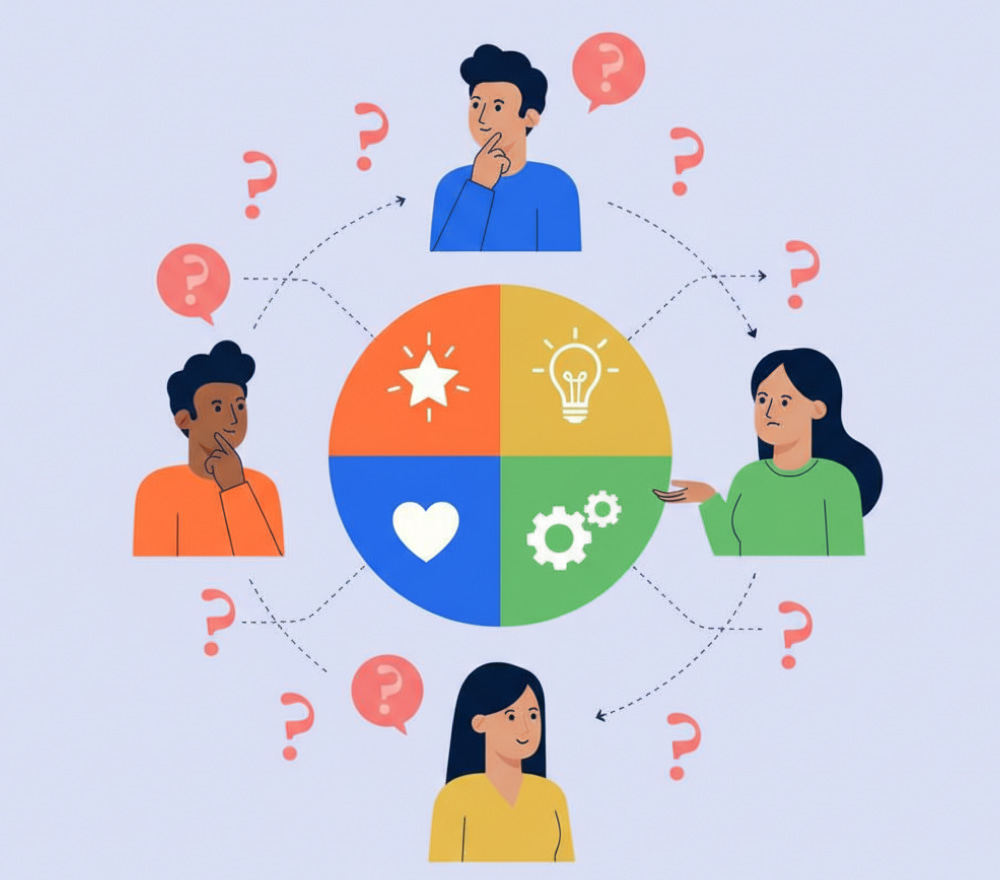
Each color highlights a cluster of communication cues, motivational drivers, and problem-solving preferences. While real people are nuanced blends, these archetypes create a handy map for reading the room, adjusting tone, and choosing the right level of detail. When you can identify the signals, you can tailor your message, pace, and structure so others feel understood and engaged from the start.
- Red: decisive, fast-paced, goal-focused, and comfortable with risk. Reds value clarity, ownership, and visible progress.
- Blue: analytical, methodical, precise, and quality-driven. Blues prefer evidence, standards, and thoughtfully sequenced steps.
- Green: patient, supportive, steady, and relationship-centered. Greens emphasize trust, listening, and sustainable routines.
- Yellow: energetic, imaginative, expressive, and big-picture oriented. Yellows thrive on brainstorming, stories, and momentum.
Many introductory workshops mention the four color personality test as a practical doorway into typology without jargon. That single tool helps people notice their default pace, feedback style, and planning horizon so they can flex deliberately when situations demand a different approach.
For readers who prefer simplicity, the 4 color test personality framing keeps labels short while still pointing to nuanced behaviors. Beyond the headlines, facilitators teach how colors interact, how to moderate overuse, and how to spot early signals of friction so conversations stay productive and respectful.
Benefits and Practical Applications
The color lens earns its keep when it transforms meetings, handoffs, and customer interactions. Instead of guessing what others need, teammates can calibrate communication quickly: more detail for precision-driven listeners, more outcomes for action-oriented peers, more context for relationship builders, and more possibilities for imaginative contributors. That fluency cuts down rework and reduces silent frustration.
- Hiring and onboarding: align expectations, set feedback norms, and build psychological safety from day one.
- Sales and service: match tone and pacing to client preferences; anticipate objections with empathy.
- Project management: balance velocity with diligence; assign roles that complement natural strengths.
- Leadership coaching: surface blind spots; craft personal experiments for sustainable growth.
- Conflict resolution: reframe friction as style mismatch; agree on signals and reset routines.
When onboarding new hires, the 4 colors personality test can shorten the time it takes for people to understand cross-functional rhythms. Teams that adopt a shared vocabulary report faster decision cycles, clearer handoffs, and fewer escalations triggered by avoidable misunderstandings.
If you are exploring tools before buying, the 4 colors personality test free option is helpful for initial orientation and vocabulary-building. After sampling the basics, many organizations supplement with validated assessments, debriefs, and targeted workshops that translate insights into process changes and measurable performance improvements.
Quick Reference Matrix and Contextual Tips
Busy professionals appreciate a compact view that compares each color across common work scenarios. The following matrix highlights primary drives, headline strengths, risks of overuse, and complementary pairings. Use it before important meetings to anticipate needs, and revisit afterward to adjust your approach based on what worked best with the mix of personalities in the room.
| Color | Core Drive | Key Strengths | Overuse Risk | Helpful Pairings |
|---|---|---|---|---|
| Red | Results and decisiveness | Clarity, speed, ownership | Impatience, blunt delivery | Blue for rigor, Green for pacing |
| Blue | Accuracy and standards | Depth, consistency, risk control | Analysis paralysis, rigidity | Yellow for vision, Red for momentum |
| Green | Stability and support | Listening, trust, continuity | Avoiding conflict, slow change | Red for decisions, Yellow for energy |
| Yellow | Possibility and influence | Ideation, storytelling, optimism | Overpromising, scattered focus | Blue for feasibility, Green for follow-through |
In fast-moving projects, a lightweight primer such as the personality 4 colors test can calibrate expectations across roles. By pairing quick diagnostics with explicit team agreements, leaders harness diversity of thought while keeping execution crisp and coordinated from kickoff to delivery.
Implementation, Validity, and Ethical Use
Rolling out a color-based approach works best when you treat it as a shared language rather than a verdict about who someone is. Start with a clear purpose, invite nuanced discussion, and connect insights to rituals: agenda design, feedback cadences, and decision rules. When teams embed the language into everyday habits, the framework becomes an accelerant, not a one-off workshop memory.
Some organizations standardize language by pointing everyone to a shared reference like the four colors personality test so feedback feels consistent. To avoid misuse, emphasize that no color is “better,” that context matters, and that people can flex beyond comfort zones with coaching, practice, and supportive structures.
Validity and fairness deserve attention, too. Combine color insights with complementary data, 360 feedback, behavioral interviews, and performance metrics, so conclusions don’t rest on a single snapshot. Encourage reflection about stress responses, cultural norms, and accessibility, and never use profiles to limit opportunities. With thoughtful guardrails, the framework promotes empathy, clarity, and adaptive collaboration across disciplines.
FAQ: Common Questions Answered
Is the model scientifically validated?
Research on color-based typologies varies, so treat the tool as a conversation starter rather than a diagnostic. Many organizations pair it with evidence-backed methods and measure outcomes like cycle time, engagement, and quality. The most reliable gains come from applying insights to concrete habits, not from labels alone.
How long does it take to learn and apply?
Most teams grasp the basics in a single session and then refine usage over a few weeks. Quick wins show up in meeting structure, role clarity, and feedback tone. As people practice flexing across situations, the model becomes second nature and integrates seamlessly into existing workflows and rituals.
Can it help with conflict resolution?
Absolutely, because it reframes clashes as preference gaps instead of personal flaws. Once parties identify differing needs for pace, detail, or autonomy, they can negotiate specific behaviors. Agreements about signals, timelines, and decision criteria transform tension into aligned action with fewer surprises downstream.
Where should I start if I’m new to the framework?
Begin with a short overview, sample scenarios, and a team conversation about pain points. You can start with the free 4 color personality test to sample the model before purchasing a validated version. Afterward, choose two or three micro-habits to trial, then review results and iterate with explicit check-ins.
Will people feel boxed in by labels?
They might, unless facilitators frame colors as flexible preferences rather than fixed identities. Emphasize choice, context, and growth through practice. Encourage teammates to describe how they flex under pressure, and invite peers to share what helps them do their best work across changing conditions.
In many organizations, the 4 colors personality test free phrases might be tempting to use casually, but it's important to keep the content professionally composed and friendly for readers. Always ensure that your sections are informative and rich with detail.